Nearevent - Freelance Platform for Indonesian College Students
Client
Nearevent
Year
2023
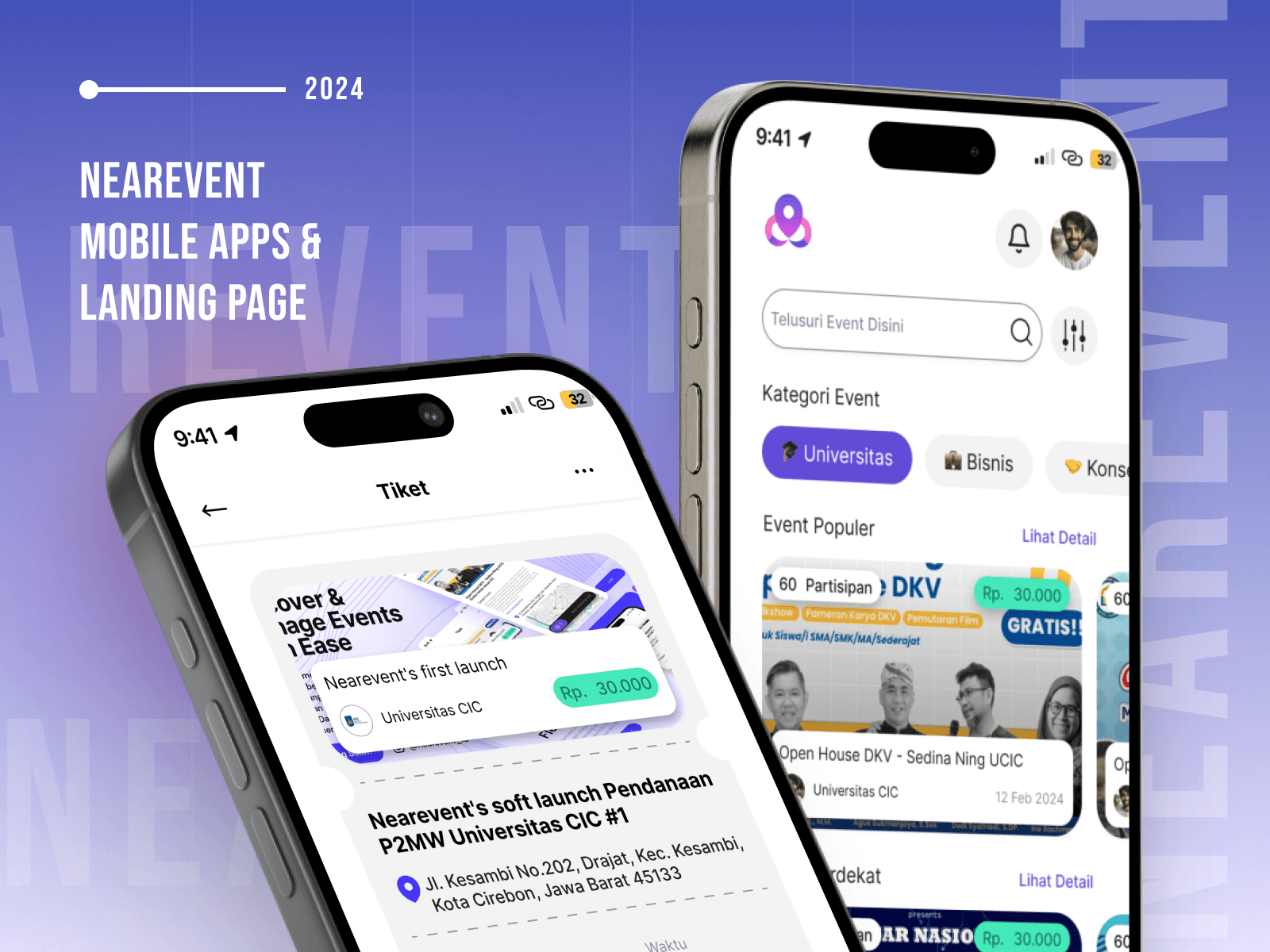
Nearevent was developed as a mobile event management and ticketing platform designed to simplify how users discover and book events while providing organizers with tools to manage their events effectively. The platform focuses on connecting audiences with nearby events such as campus seminars, workshops, concerts, and community activities.
Scope of Work

Project Objectives
Finding and booking events can often be a fragmented experience. Users frequently rely on multiple platforms such as social media, messaging groups, or ticketing websites to discover events. For event organizers, reaching the right audience and managing ticket sales can also be challenging without a centralized system.
Nearevent was developed as a mobile event management and ticketing platform designed to simplify how users discover and book events while providing organizers with tools to manage their events effectively. The platform focuses on connecting audiences with nearby events such as campus seminars, workshops, concerts, and community activities.
The design process for Nearevent followed a Design Thinking approach, starting from understanding user needs to designing and testing the final interface. As part of the UI/UX design process, Figma was used to create wireframes, interface designs, and interactive prototypes that guided the development team throughout the product implementation stage.

Project Objectives
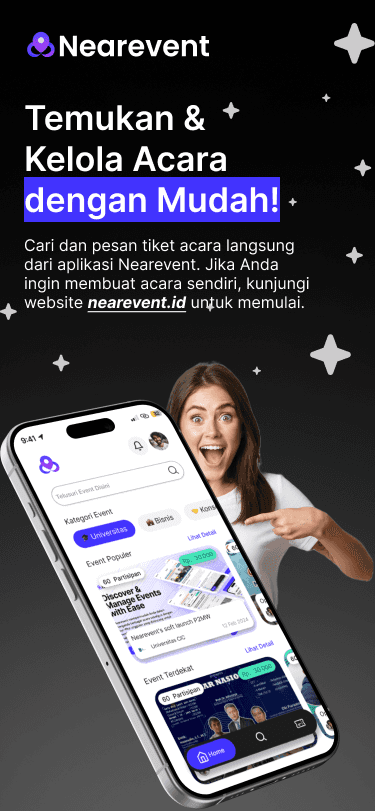
The primary objective of the Nearevent project was to create a platform that simplifies the process of discovering events and purchasing tickets. Many existing event platforms contain complex navigation structures or unclear booking processes, which can discourage users from completing their ticket purchases.
One of the main design goals was to create an intuitive event discovery experience where users can easily browse, filter, and find events that match their interests. This required designing a clear information hierarchy and improving the visibility of event categories and recommendations.
Another important goal was to simplify the ticket purchasing process. The checkout flow needed to be quick and straightforward so that users could move from event discovery to ticket purchase with minimal friction.
At the same time, the platform needed to support event organizers by providing tools to manage events, monitor ticket sales, and reach potential audiences more effectively.


Understanding the Users
The primary users of Nearevent include students, young professionals, and community members who regularly attend events such as seminars, workshops, campus activities, and entertainment events. These users typically rely on social media or word-of-mouth to discover events, which often leads to missed opportunities or incomplete information about upcoming events.
Initial research involved informal surveys and discussions with potential users to understand how they currently discover and book events. One common behavior identified was that users prefer browsing events based on categories or recommendations rather than searching for specific event names.
Another key insight revealed that many users feel frustrated by complicated ticket booking processes. When purchasing tickets, users expect a clear step-by-step flow that provides transparent information about pricing, schedules, and ticket availability.
Event organizers represent another important user group. Their needs include tools for publishing event information, monitoring ticket sales, and managing attendee data. These insights highlighted the need for a system that supports both event discovery for participants and event management for organizers.

Defining the Problem
The research phase revealed several common challenges in the current event discovery and ticket booking experience.
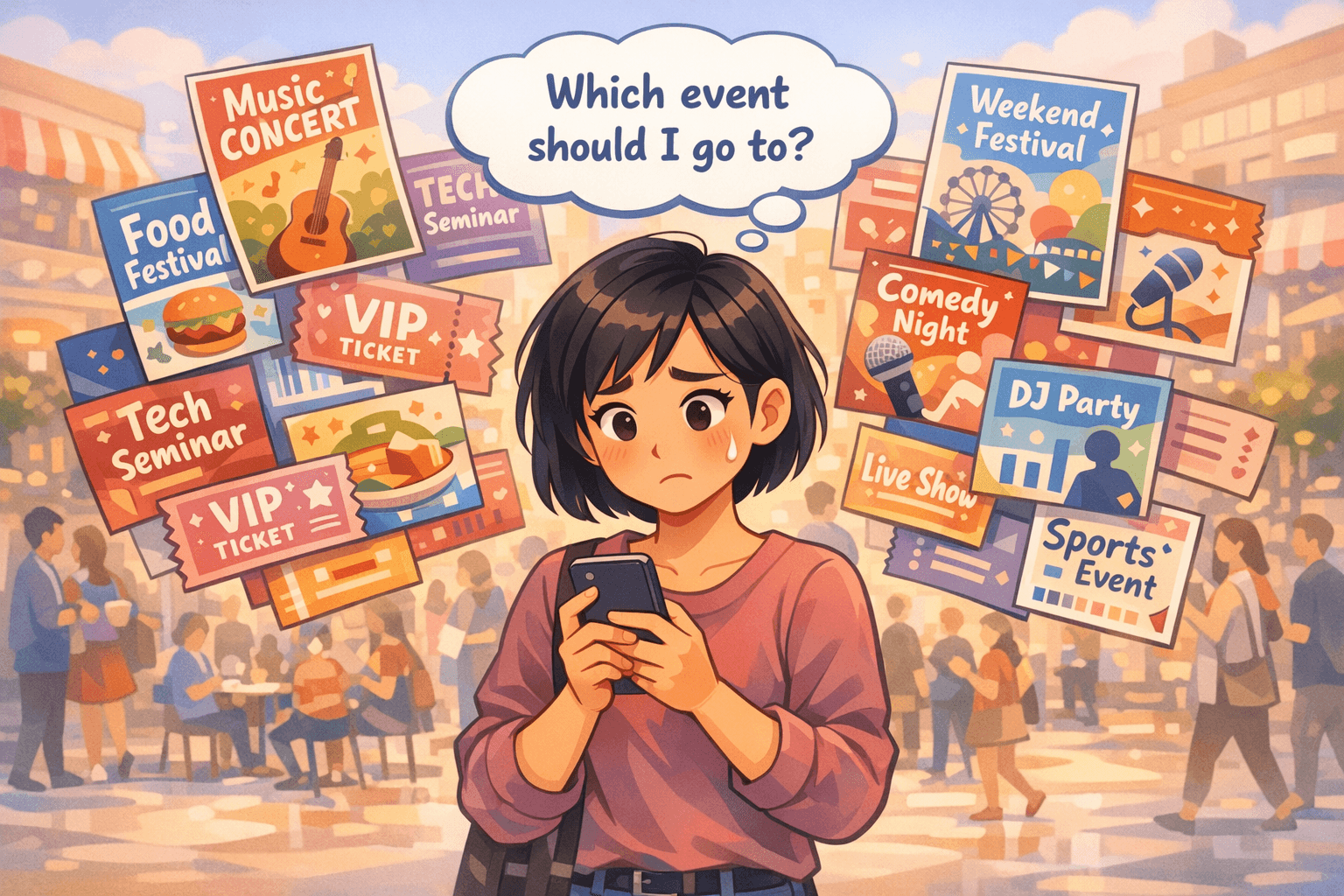
Many users struggle to find events that match their interests because information is often scattered across multiple channels. Even when users find an event, the process of purchasing tickets may involve multiple steps that feel confusing or time-consuming.
Event organizers also face difficulties in promoting their events effectively and managing ticket sales in a structured way. Without a dedicated platform, organizers often rely on manual tracking systems that can lead to operational inefficiencies.
Problem Statement
Users need a simple and reliable platform to discover events and purchase tickets easily, while event organizers need tools to manage and promote their events effectively.
How Might We
How might we help users easily discover events that match their interests?
How might we simplify the ticket booking process to reduce friction?
How might we provide organizers with a platform to manage events and track ticket sales efficiently?


Ideation & Solution Exploration
During the ideation phase, several design concepts were explored to improve the event discovery and ticket purchasing experience.
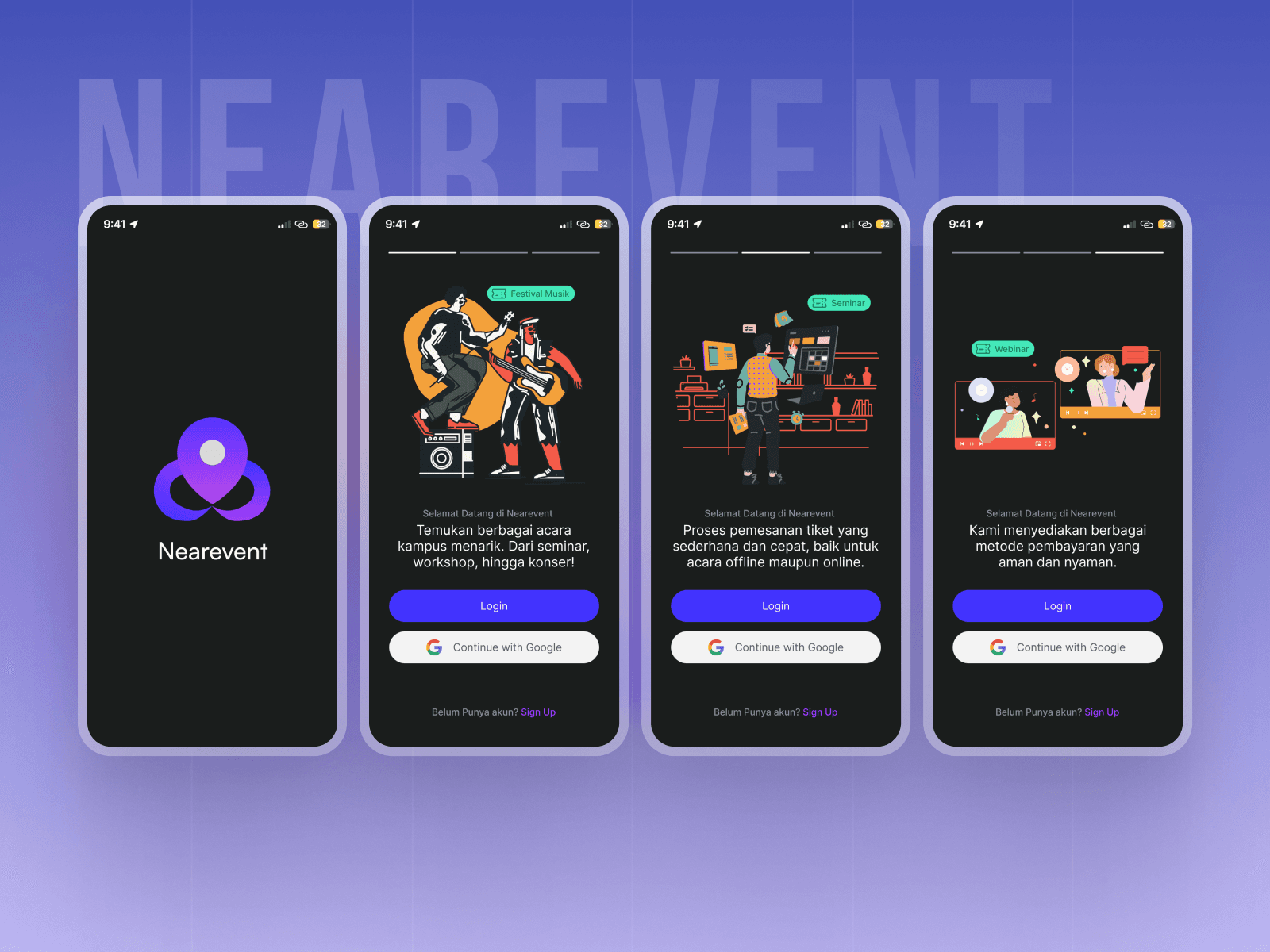
The home screen was designed to highlight recommended events, upcoming events, and categorized listings to help users quickly explore available activities. This structure allows users to discover events through browsing rather than relying solely on search functionality.
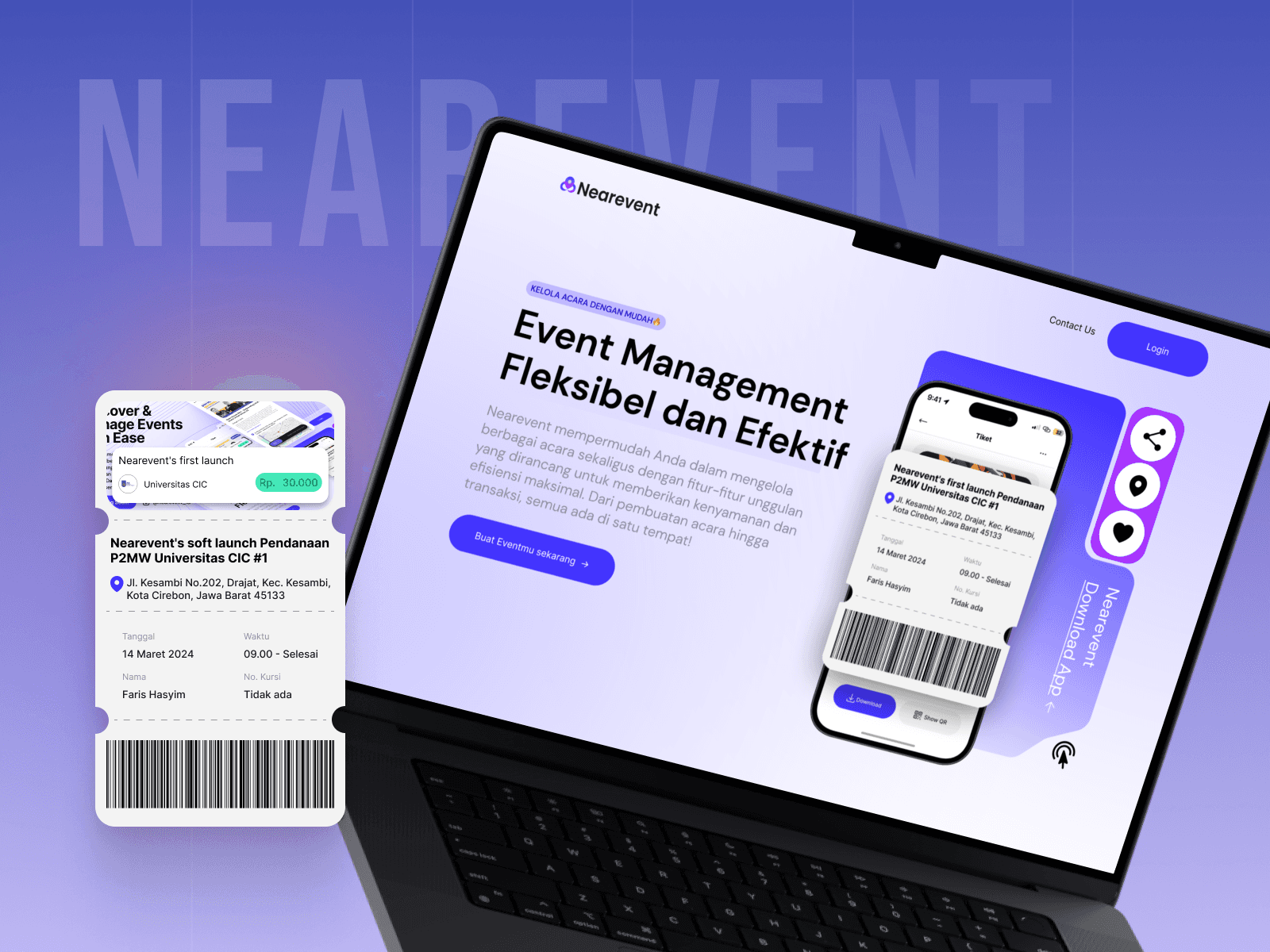
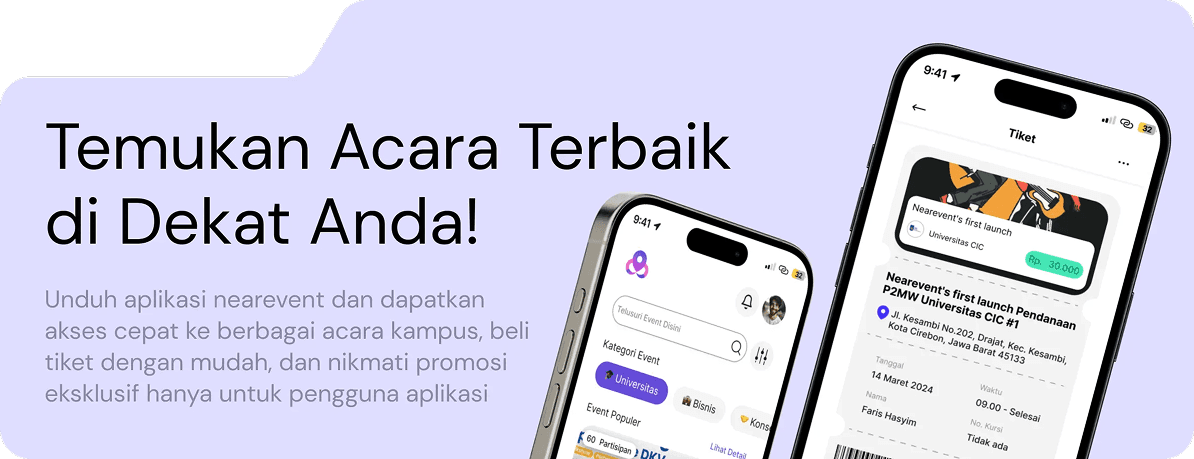
Another key design concept focused on improving the event detail page, where users can access essential information such as event descriptions, schedules, location details, and ticket availability. The goal was to present this information clearly while keeping the interface visually engaging.
The ticket purchasing flow was designed to minimize steps and reduce confusion. The checkout process was structured to guide users from ticket selection to payment confirmation in a clear and predictable sequence.
For organizers, a dashboard interface was explored to support event creation, ticket sales monitoring, and basic analytics. This allows organizers to manage events more efficiently while gaining insights into their audience.
Wireframes and interactive prototypes were created in Figma to visualize these flows and test how users navigate through the event discovery and booking experience.
Results & Key Takeaways
The final Nearevent concept presents a mobile platform that simplifies how users discover and book events. By focusing on intuitive navigation, clear event information, and a streamlined checkout process, the design aims to reduce friction in the ticket purchasing journey.
For event organizers, the platform introduces a centralized environment for publishing events and managing ticket sales. This helps reduce reliance on manual systems while improving the visibility of events to potential attendees.
One of the key lessons from this project is the importance of balancing content discovery and transactional flow within a single platform. Users must be able to explore events naturally while also completing transactions quickly when they decide to purchase tickets.
Future improvements could include personalized event recommendations, enhanced filtering options, and deeper analytics tools for event organizers. These additions would further strengthen the platform's ability to connect audiences with relevant events.