Ihome - Designing a digital property management ecosystem
Client
Ihome
Year
2025
Managing residential properties often involves multiple manual processes, from handling facility bookings and managing maintenance requests to communicating with residents. Many property management teams still rely on fragmented systems such as messaging apps, spreadsheets, or manual records, which can create inefficiencies and delays in responding to resident needs.
Scope of Work

Project Objectives
The main goal of the Ihome project was to simplify everyday property management interactions for both residents and property administrators. Many of the existing processes such as paying bills, reserving facilities, and reporting issues were often handled manually or through disconnected systems.
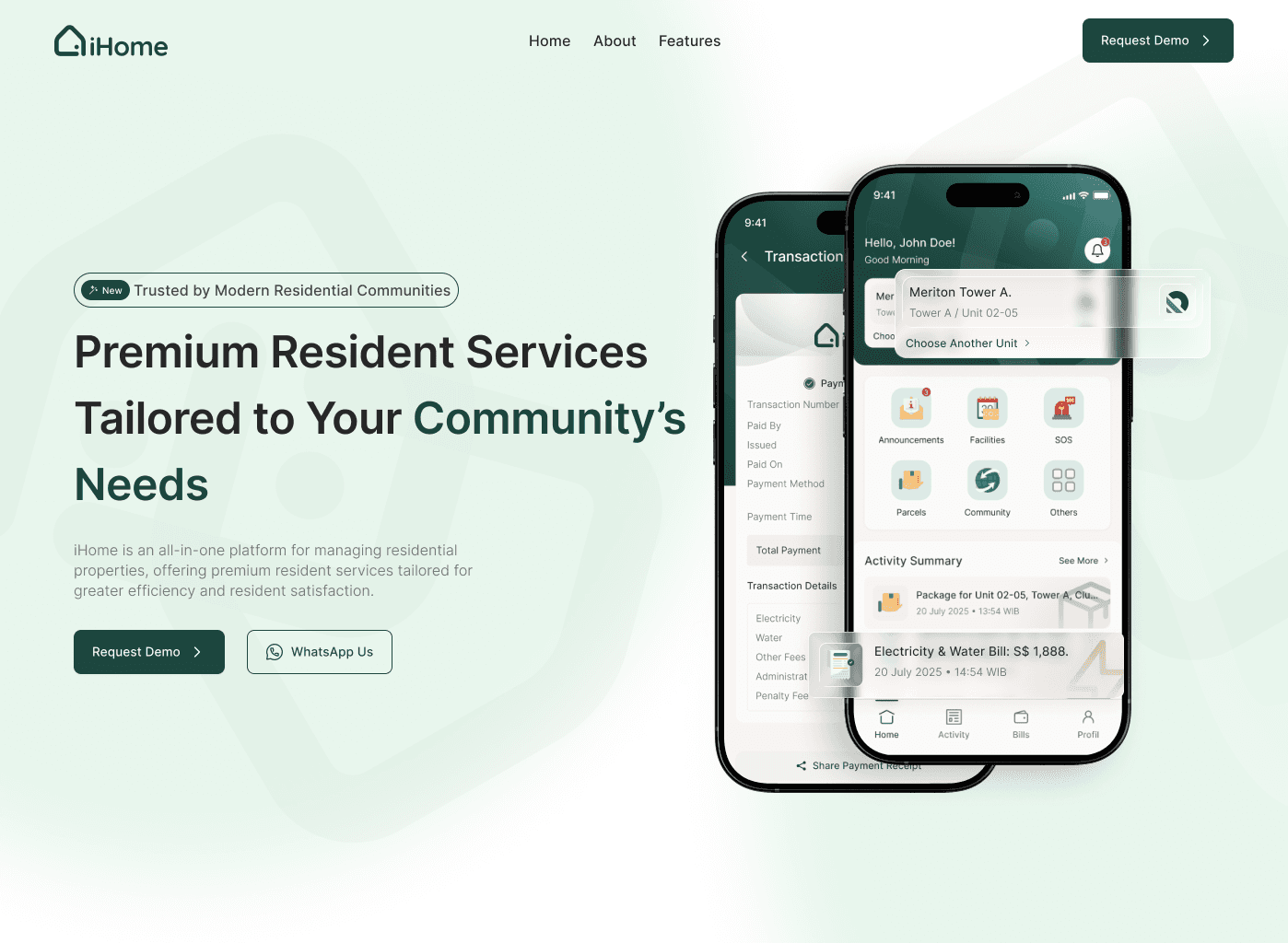
One of the key design objectives was to centralize these services within a single digital platform. Residents should be able to access important services quickly, such as viewing invoices, paying bills, booking facilities, or contacting management.
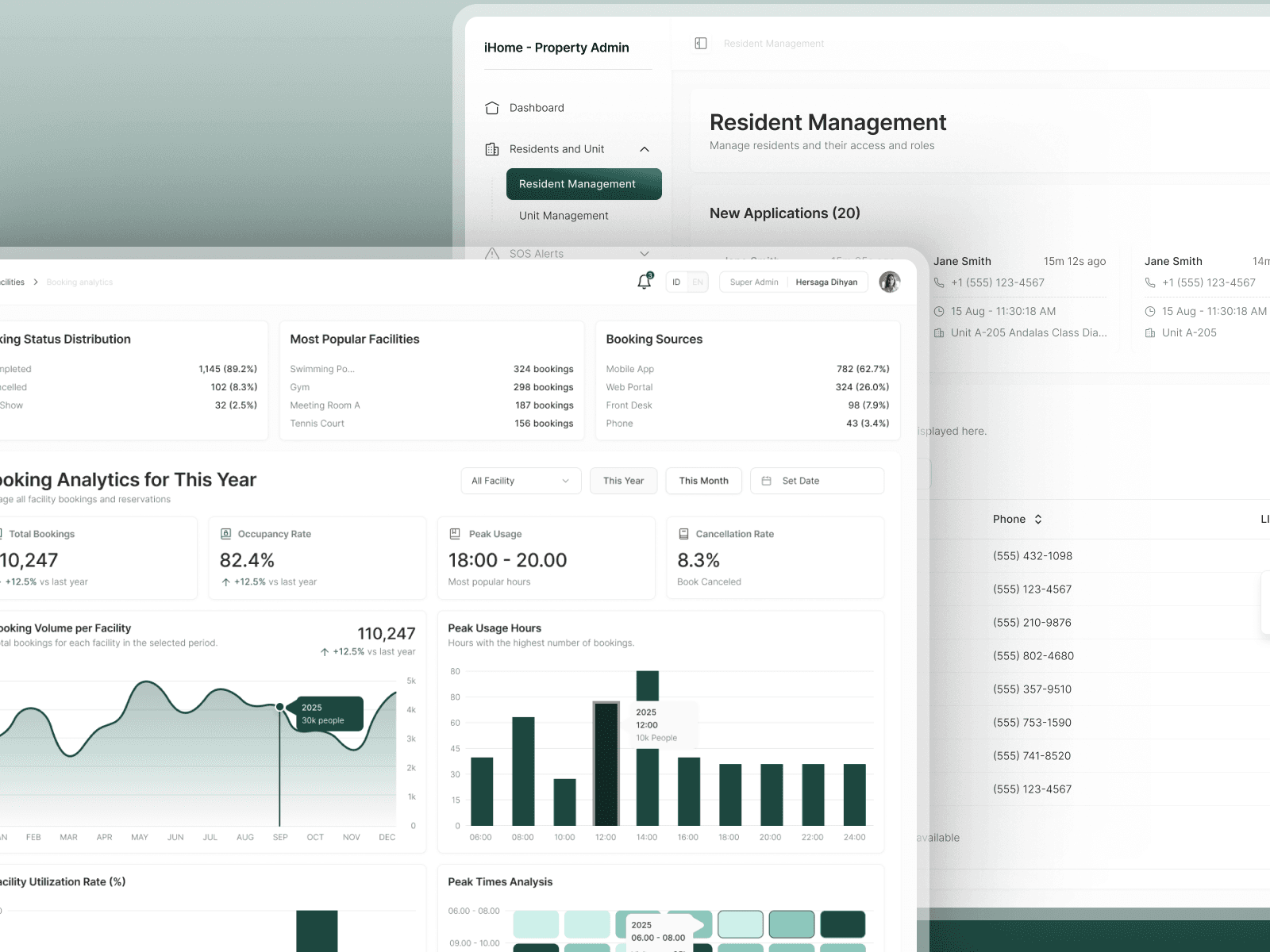
Another objective was to improve operational efficiency for property administrators. By providing tools for complaint management, emergency response handling, and facility scheduling, the platform aims to help property teams manage daily operations more effectively.
Ultimately, the design sought to create a system that supports smooth communication, transparency, and faster response times between residents and property management teams.

Understanding the Users
The Ihome ecosystem primarily serves two main user groups: residents and property management teams.
Residents include homeowners or tenants who live within a managed residential property. Their primary interactions involve accessing building services such as paying maintenance fees, reserving shared facilities, receiving announcements, or reporting issues to management. Convenience and quick access to essential services are important factors for this group.
Property management staff represent the second group of users. Their responsibilities include responding to resident complaints, managing facility reservations, handling package deliveries, monitoring emergency alerts, and maintaining operational oversight of the property.
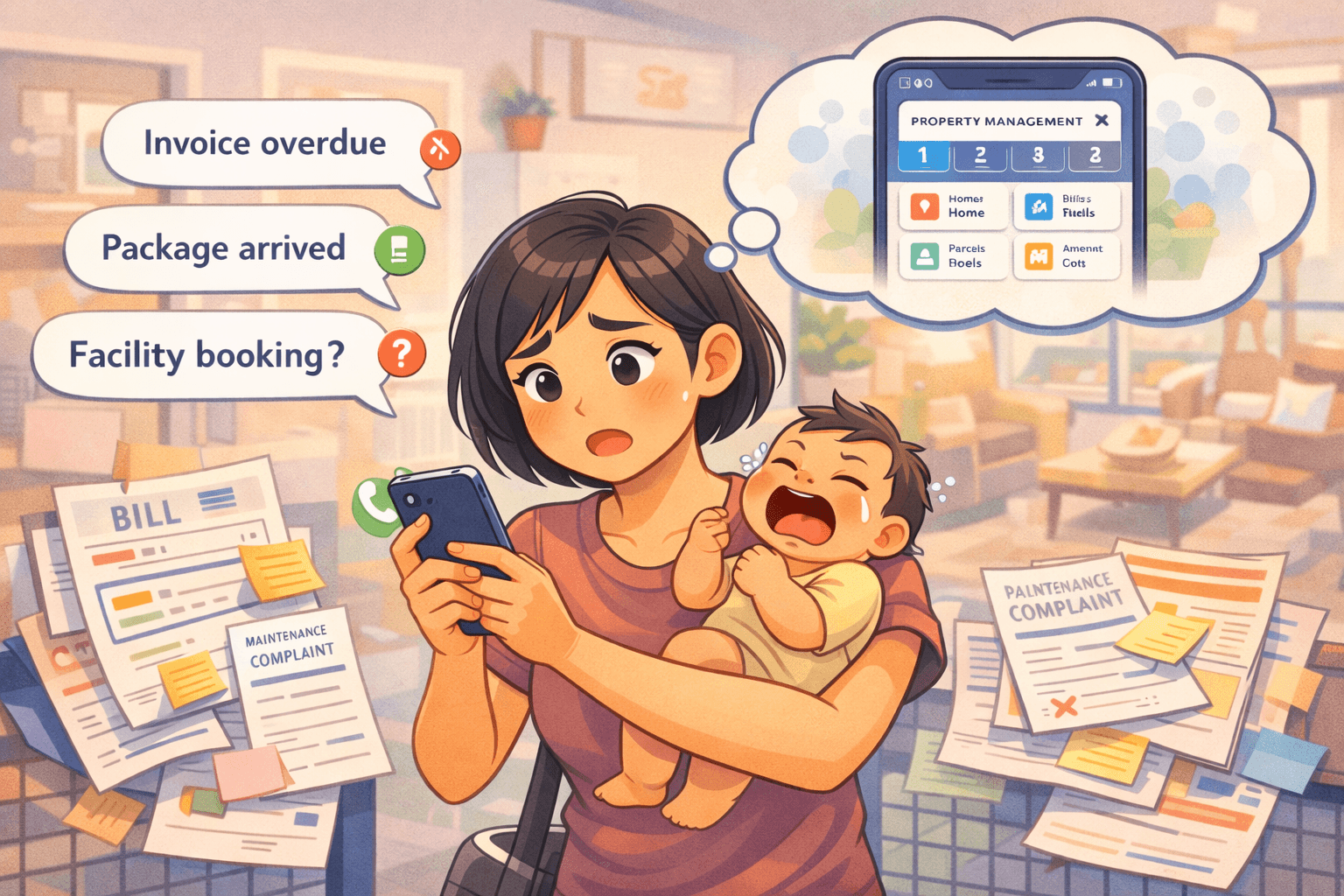
Early insights suggested that both groups often experience friction due to fragmented communication channels. Residents may not know where to report issues, while management teams may struggle to track and prioritize incoming requests. These findings emphasized the importance of building a centralized system that supports clear workflows and efficient communication.


Defining the Problem
Through early exploration of property management workflows, several key pain points were identified.
Residents often need to interact with management for a variety of services, but these interactions are usually spread across different channels such as messaging apps, phone calls, or physical office visits. This fragmented communication can lead to delays in responding to issues or confusion about request status.
For property managers, tracking incoming requests and coordinating operational tasks can become difficult without a structured system. Emergency situations, complaints, and facility bookings may require quick responses, yet information may not always be organized in a way that allows for efficient action.
Problem Statement
Residents and property managers need a centralized platform that simplifies property-related services, improves communication, and enables faster response to daily operational needs.
How Might We
How might we help residents access essential property services quickly and easily?
How might we enable property managers to respond to resident requests more efficiently?
How might we create a reliable system for handling emergencies and service requests in real time?


Ideation & Solution Exploration
During the ideation phase, multiple solution concepts were explored to support both residents and property management teams within a unified system.
For residents, the focus was on creating an interface that allows quick access to everyday services. Key features explored include a bill payment system, where residents can view invoices and complete secure payments, as well as a facility reservation system that allows users to book shared facilities through a real-time calendar.
Another important feature concept was an emergency assistance system with a one-tap SOS button. This allows residents to quickly notify management during urgent situations. In addition, a community announcement section was designed to keep residents informed about building updates and notices from property management.
From the administrative perspective, the platform includes tools for managing complaints, monitoring emergency alerts, and handling package deliveries. Features such as complaint tracking, facility reservation management, and parcel handling workflows were designed to help administrators stay organized and respond more efficiently to resident requests.
Early design concepts were translated into wireframes and interface prototypes to test how residents and administrators would interact with the system across different platforms.


Results & Key Takeaways
The Ihome project resulted in a multi-platform property management system that connects residents and property managers within a single digital ecosystem. By centralizing key services such as bill payments, facility reservations, and complaint management, the platform aims to simplify daily interactions within residential communities.
For residents, the platform provides quick access to important services through a mobile application, improving convenience and transparency in managing property-related tasks. For property administrators, the system offers structured tools that help manage operational workflows more efficiently.
One of the key insights from this project is the importance of designing property management systems that balance simplicity for residents with operational control for administrators. Both groups rely on the same platform but interact with it in very different ways.
Future improvements could explore additional features such as automated maintenance scheduling, improved analytics for property managers, and enhanced community engagement tools that further strengthen communication between residents and management.